











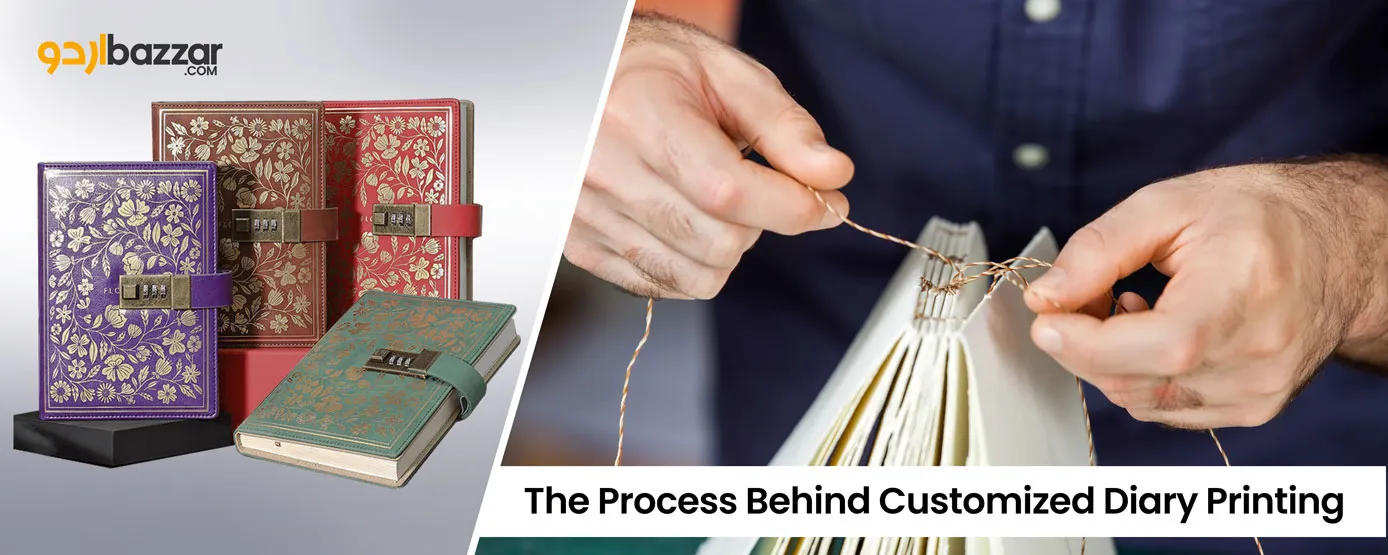
The Process Behind Customized Diary Printing
Custom diaries have gained a lot of popularity in the modern world where everything is fast paced and requires customization. Personal diaries, gifts, or even promotional ones are diaries that have been tailor made to suit an individual, make a special gift or even to be used in promotion. The customized diary printing is one of a complicated process in customized printing that has several steps involved in order to make the final product match the expectation of the client and at the same time provide the highest quality. This process is going to take a deeper look at all the different steps involved in the customized diary printing process, including the design conceptualization, through to the finished product.
Learning Customized Diary Printing
Diary printing means its opponents personalize diaries according to the satisfaction of a customer. These preferences can be custom covers, unique page layouts, personalised branding or even adding certain contents, quotes, dates and logos. It aims to develop a unique product that touches the personal sense of style of the customer or company branding needs.
What is the Reason to Choose Customized Diaries?
Personalized diaries are intimate and have a greater meaning than those that are produced in generic ways. The personalized diaries are a good promotional tool to businesses who need an unobtrusive but strong method of brand broadcasting. Households can be used to design personal creativity and yet have a day which can be organized well.
The Personalized Diary Printing Procedure
This is because the method of printing a custom diary is quite complex and highly flexible such that the resultant end product satisfies varied customer demands. The process has been explained below with emphasis on the stages so that you gain insight on the steps involved.
1. Preliminary Consultation and Design Brief
The first step of the history of building a single diary involves an elaborate consultation of the client.The purpose of the diary has to be understood whether the project is individually done or company wise. The client gives a design brief, which includes their likes or preferences with the style of the diary, the cover material the color, fonts, size and any special requirements that he/she may pave like inclusion of pockets, bookmarks or foil stamping.
It is also at this point where the content which is to be printed on such as the logos, quotes or personalized messages is to be discussed. This is the phase where the designers strongly liaise with the client in the process of ensuring that all the needs and the expectations are well understood in order to progress to the second stage.
2. Design and Mockup Development
Each time the design brief has been determined, then, the following process will be establishing a digital design mockup. This is a mock up that shows the appearance of the personalized diary. It is comprised of all the mentioned elements of the design brief including:
- Cover Design: It is possible to have the graphics, logo, or even customized text as the cover design all depending on the tastes that the client would prefer.
- Page Layout: It makes it possible to design custom layouts of the interior pages; the client may require plain pages, lined pages, grids, or a mix of all these options.
- Additional: In case of the client requiring certain elements, like illustrations, calendars, or motivating quotes, they are added to the mockup list.
The design is reviewed at this phase where the client is given a chance. Where there are revisions to be done then accommodation can be done to see to it that the end product is what they envisaged. Constructive criticism helps a lot at this stage so that after the process of printing one does not have to make many amendments.
3. Paper Selection
The print instruction comes in choosing the right paper in the customized printing of diaries. The kind of paper one will use will decide on the texture, durability, and felling of the diary. Depending on the needs of the client, various other kinds of paper could be selected such as:
- Matte Paper: Uses this kind of paper which provides a smooth and classy appearance. Suitable in a minimalist or sophisticated manner.
- Textured Paper: Provides a sense of texture to the diary and adds more to the sensation.
- Recycled Paper: There are citizens that want to reduce their foot impact on the environment, and recycled paper is the choice.
- Glossy Paper: It is good on vibrancy prints especially on the cover.
The feel of the end product is also very important in the thickness of the paper.The need to emphasize both aesthetics and functionality should not be ignored to make a diary both wonderful and useful.
4. The Printing of the Diary
This process involves the printing of personalized diaries according to the customer's specifications. The method of printing can vary, as well as the design and materials used. Popular printing techniques include:
- Offset Printing: This is a famous print that is produced with vibrant colored prints and with excellent details. When it comes to bulk orders, offset printing will be a good option as it will come cheaper on a large order compared to other prints.
- Digital Printing: Ideal where the run is small or when very detailed custom printing is required. Digital printing is flexible especially on a short term basis.
- Screen Printing: Can be applied on heavier designs which includes logos, or large illustrations on coverages.
- Foil Stamping: It offers an extreme feel as metallic foil is applied to the cover or pages, and normally it is applied on logos or text.
At printing, it is imperative to check the color, place and general quality to certify that you get a perfect end product.
5. The Binding of the Diaries
After the printing of the pages, a binding phase comes next. These techniques of binding have various aesthetic and functional advantages, and they are as follows:
- Saddle Stitching: This is more ideal in slimmer diaries. The process is that of folding onto one another or sheets of paper and then stitching them along the spine.
- Perfect Binding: Thicker diaries tend to have this type of binding. The pages are pasted on the spine and then wrapped with soft or hard cover, which makes them smart and professional in looks.
- Spiral Binding: These may be selected when the book must be portable and requirements of the diary, i.e. able to open up to lie flat. In this method, holes are punched down the periphery of the pages and they are then looped through a spiral coil.
- Hardcover Binding: Offers sturdier and better look and feel, having a tough outer cover and quality finishing.
The binding will make the diary last long as it is used on a daily basis.
6. Finishing Touches
Once bound the book is given some finishing touches that make the diary all the more attractive:
- Embossing and Debossing: These methods can be adopted to build a texture on the cover so as to provide an elevated or depression effect on logos, writing or designs.
- Foil Stamping: As mentioned, foil stamping provides a shiny, metallic coating of particular areas that will generally be used in logos or design.
- Special Features: Diaries can also have other features such as pen loops, or pockets, or elastics and this can add both style and utility to the diaries.
Such finishing details make the personal diary special and present the appealing and expensive product.
7. Quality Control and Packaging
Quality control is very comprehensive in the production of customized diaries before they are shipped to the customers. Each of the diaries is checked against possible printing errors, and defects in binding, and any errors. This is done to make sure that nothing but the best products are delivered to the clients.
Quality control is done on the diaries and after that they are well packed so that they do not get damaged on their way. The packaging may also be personalized and include branded boxes or wrapping to make an extra unboxing experience.
Conclusion
Customized diary printing is a complex process which follows a number of steps and each is made with the sole intention of bringing not only the best, but also satisfaction to the customer. It seems that everything which the process goes through, its initial consultation and design brief, final quality checks and packaging, all help in the production of a unique, high end product.
To make the decisions that satisfy visual and practical demands, you are going to want to have a rough idea of how the process goes so that even when you choose to print a custom diary or create a promotional item you can do so in a way that can support your goals.
Taking time in choosing the materials, design and printing process, as well, you can make sure that your custom configuration of the diary will be a good fit to any collection and will serve that purpose and also represent individual or brand matter.